
 Español











When a food safety alert occurs, every minute counts. Locating an affected lot and identifying where it was received, transformed, or shipped can reduce the scope of a recall and protect consumers.
Therefore, digital food traceability should no longer be viewed solely as a regulatory requirement. It is also a tool for reducing errors, responding quickly, and making decisions based on verifiable information.
What Does the FDA Food Traceability Rule Require?
The FDA Food Traceability Rule establishes additional requirements for companies that manufacture, process, pack, or hold foods included on the Food Traceability List.
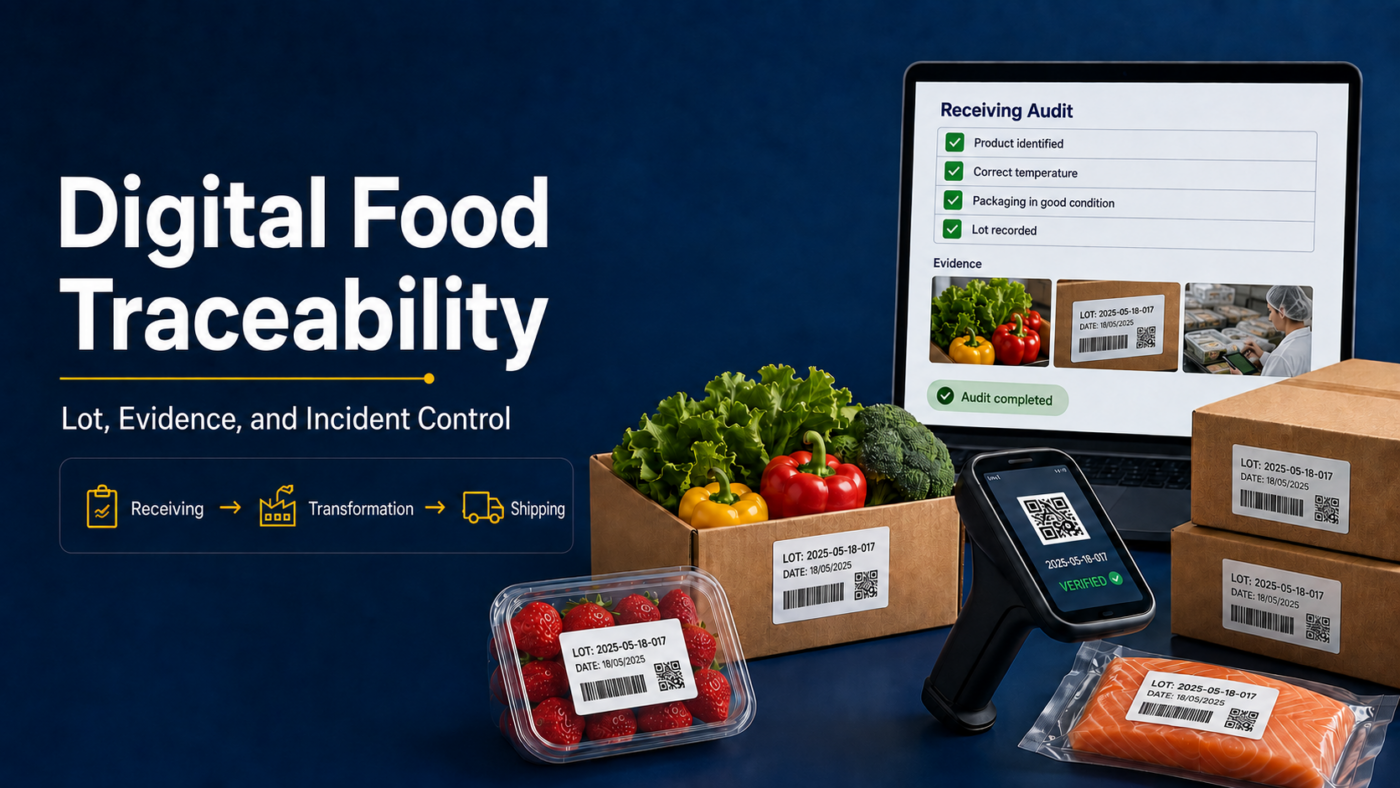
The model is based on two concepts. First, Critical Tracking Events, such as receiving, transformation, and shipping. Second, the Key Data Elements associated with each event, including lot codes, dates, quantities, and locations.
In addition, companies subject to the rule must have a traceability plan. When the FDA requests information in response to an outbreak, recall, or other public health threat, the corresponding records must be made available within 24 hours. In certain cases, they must also be submitted in an electronic, sortable spreadsheet, according to the FDA’s official website.
What Is Happening With the Compliance Date?
The original compliance date was January 20, 2026. However, the FDA proposed extending it by 30 months, to July 20, 2028. Subsequently, the U.S. Congress instructed the agency not to enforce the rule before that same date, and the FDA stated that it would follow this direction.
This pause should not become a reason to wait. On the contrary, it provides time to identify covered products, review records, and agree with suppliers and customers on how information will be shared.
The issue is also relevant for Mexican companies. Unless an exemption applies, the rule may cover foreign organizations that handle foods on the list intended for the United States.
The Risk of Relying on Manual Records
Information loses its value when it is scattered across paper documents, emails, spreadsheets, and messages from different locations.
In 2026, the FDA conducted readiness exercises with 15 companies across six supply chains. The test required participants to locate records and submit them electronically within 24 hours. The final report identified progress, but it also revealed incomplete data and difficulties in correctly sharing traceability lot codes and their sources.
The conclusion is important: technology helps, but coordination among supply chain participants was even more critical. Digitalization does not simply mean replacing paper with screens. It means agreeing on what must be recorded, who is responsible, and how information should flow.
How to Begin Implementing Digital Food Traceability
A company can start with five actions:
- Identify products, lots, suppliers, and locations.
- Map receiving, transformation, and shipping events.
- Define responsible personnel and mandatory data for each stage.
- Record evidence, temperatures, and incidents as they occur.
- Test how long it takes the team to reconstruct a lot’s journey.
Platforms such as Quality Audits make it possible to centralize checklists, photographic evidence, findings, responsible team members, and inventories. They also simplify incident tracking and allow organizations to review historical information by product, supplier, location, or period.
At Nubetia, we help organizations design and digitalize these workflows according to their specific operations. The goal is not to accumulate records, but to turn them into a fast, verifiable, and useful response.
The best traceability test is simple: can your team reconstruct a lot’s journey when it truly matters?
Schedule a review to determine which support your company needs. You can schedule a consultation call here.
References:
Food and Drug Administration. (2026). FSMA Final Rule on Requirements for Additional Traceability Records for Certain Foods.
Food and Drug Administration. (2026). FDA Traceability Readiness Tabletop Exercises: Final Report.
Food and Drug Administration. Frequently Asked Questions: FSMA Food Traceability Rule.
