
 Español











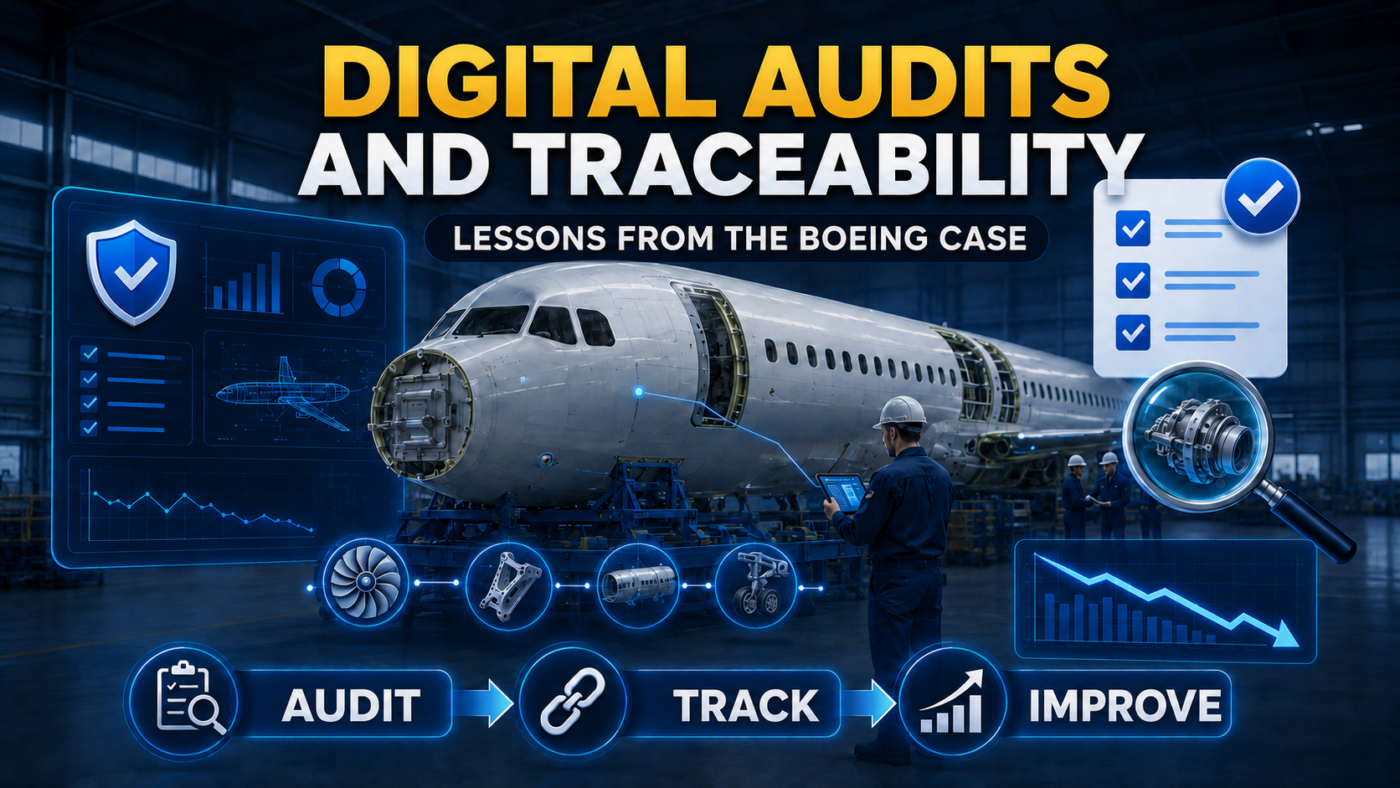
Detecting an error is important. However, documenting it, identifying its root cause, and preventing it from happening again are the actions that truly drive continuous improvement.
The Boeing case demonstrates how digital audits and traceability can become powerful tools for improving complex processes. The company has incorporated inspections, controls, training, and digital monitoring into its Safety and Quality Plan.
Although every industry faces different risks, this case offers valuable lessons for manufacturing, healthcare, food production, logistics, retail, and other sectors.
Boeing Strengthens Its Quality Processes
On its official website, updated on July 27, 2026, Boeing explains that its strategy focuses on four main areas:
- Strengthening workforce training.
- Simplifying instructions and processes.
- Reducing defects.
- Promoting a culture of safety and quality.
The actions reported by the company include random audits, compliance reviews of work instructions, and the digitalization of training records.
In addition, Boeing has simplified more than 10,000 installation plans. It has also introduced supporting videos and controls to verify that each task is completed correctly.
The U.S. Federal Aviation Administration stated that the plan should include additional internal audits, supplier oversight, employee training, and performance monitoring.
What Is a Help Desk?
An SLA, or Service Level Agreement, defines the expected response times and conditions for service delivery. Handling a password reset request is not the same as responding to a server outage. An SLA allows organizations to establish priorities based on impact and urgency.
Within a help desk, SLAs help measure service performance and ensure that requests are handled in an organized and timely manner.
Technology to Prevent Errors
Boeing has also improved its manufacturing software. New features include guided data entry, automated validations, and easier access to engineering information.
Likewise, the platform improves the tracking of parts and completed work. This helps reduce manual errors and gives employees access to relevant information during operations.
The company has also implemented a system to control work in progress. Its purpose is to track and protect parts associated with activities that have not yet been completed.
In addition, Boeing began testing RFID tags to identify thousands of tools used in the 737 and 787 programs.
What Results Has Boeing Reported?
According to Boeing, defects in 737 fuselage assembly decreased by an average of 40% compared with 2025 performance.
The company attributes this progress to an increased number of inspection points and new quality approval processes. In addition, tool control initiatives achieved initial reductions of between 80% and 90% in tool losses within the areas where they were implemented.
These figures are results reported by Boeing. Therefore, they should not be interpreted as an independent assessment or attributed to a single tool. Instead, they reflect a strategy that combines people, processes, controls, and technology.
Digital Audits and Traceability: Five Key Lessons
The Boeing case highlights five practices that can benefit any organization:
- Standardize inspection criteria.
- Record evidence at the time of the inspection.
- Assign a responsible person to each finding.
- Monitor corrective actions until they are closed.
- Use performance indicators to identify risks and recurring issues.
Boeing monitors metrics related to rework, supplier shortages, unfinished work, and defects identified before each delivery. When an indicator reveals a risk, the system should trigger corrective action.
From Audits to Continuous Improvement
An audit loses value when its results remain scattered across paper documents, spreadsheets, emails, or WhatsApp conversations. Platforms such as Quality Audits make it possible to digitalize checklists, attach evidence, record findings, and assign responsible team members. They also simplify the monitoring of corrective actions and the review of indicators by location, department, or period.
At Nubetia, we help organizations configure these processes to transform audit information into measurable decisions and improvements. The question is not simply how many audits a company conducts, but how many findings it successfully resolves and prevents from recurring.
Schedule a review to determine which support your company needs. You can schedule a consultation call here.
References:
Boeing. (2026). Strengthening Safety & Quality. https://www.boeing.com/strengthening-safety-and-quality
Federal Aviation Administration. (2024). FAA Continues to Hold Boeing Accountable for Implementing Safety and Production Quality Fixes. https://www.faa.gov/newsroom/faa-continues-hold-boeing-accountable-implementing-safety-and-production-quality-fixes
Federal Aviation Administration. (2025). FAA Statement: Boeing Airworthiness Certificates. https://www.faa.gov/newsroom/faa-statement-boeing-airworthiness-certificates
